
How Much Does a Heat Pump Cost in the UK?
On this page
A heat pump is one of the biggest home upgrades you can buy, so it is no surprise that the first question most people ask is a simple one: how much will it actually cost? The honest answer is that it costs more than a new boiler, but usually far less than the scary headline figures suggest once the government grant is taken off. This guide explains what a typical air source heat pump installation costs in the UK, what is included in that price, and which extras can push a quote up or down.
The typical cost of an air source heat pump
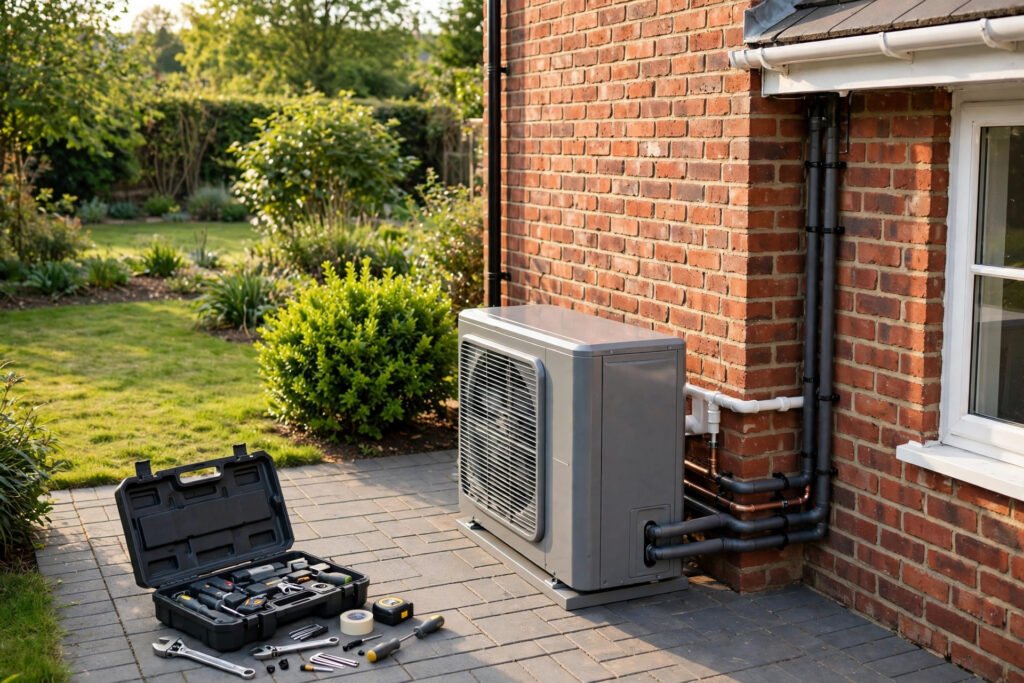
The Energy Saving Trust puts the typical cost of installing an air source heat pump at around £12,000. In practice, most households receive quotes somewhere in the region of £10,000 to £14,000 for a straightforward installation in an average-sized home. Smaller properties with a simple layout can come in below that range, while larger detached houses, or homes needing a lot of extra work, can cost noticeably more.
That figure covers a complete air-to-water system: the outdoor unit itself, a hot water cylinder, controls, pipework changes and the labour to fit and commission everything. Installation typically takes a few days rather than the single day a like-for-like boiler swap might take, which is part of the reason labour costs more.
For comparison, our guide to how much a new boiler costs shows that a replacement gas boiler is considerably cheaper to buy and fit. A heat pump is a bigger project, and it helps to budget for it as one.
The Boiler Upgrade Scheme grant
In England and Wales, the Boiler Upgrade Scheme takes a large chunk off the price. The current grant is £7,500 towards an air source heat pump, and the same amount towards a ground source heat pump. There is also £5,000 towards a biomass boiler in limited circumstances and £2,500 towards an air-to-air heat pump, although this article focuses on the standard air-to-water systems most homes install.
Until March 2027, you can get an additional £1,500 — £9,000 in total — towards an air source or ground source heat pump if your property is currently heated by oil or LPG and does not have a mains gas connection. That extra help is aimed at off-grid homes, where heating fuels tend to be more expensive.
Who is eligible?
The basics, according to GOV.UK, are:
- You must own the property — this includes a second home or a property you rent out to tenants.
- You must be replacing a fossil fuel heating system, such as gas, oil, LPG or electric heating.
- You can only get one grant per property, and you cannot use it to replace an existing low carbon heating system.
- You cannot get a grant for a hybrid system, such as a heat pump working alongside a gas boiler.
- Most new build properties and social housing are not eligible, although self builds can qualify in some circumstances.
You do not apply for the grant yourself. You get quotes from MCS certified installers, agree a price, and your installer applies on your behalf through Ofgem. The grant value is deducted from the amount you pay, and it should be shown clearly on your quotation and invoice. Your installer must commission and install the system within 120 days of the grant application, so timescales matter once you commit.
Scotland and Northern Ireland run separate support schemes, so if you live there, check the arrangements that apply to you rather than assuming the Boiler Upgrade Scheme figures apply.
What you might actually pay
Take the Energy Saving Trust’s typical figure of around £12,000 and subtract the £7,500 grant, and the amount left to pay is around £4,500. Real bills vary: a simple installation at the lower end of the range could leave you paying only a few thousand pounds, while a large home needing extensive extra work could still leave a five-figure balance. Always compare the after-grant figure between quotes, and check exactly what each installer has included.
Installation of a heat pump in a home is also currently zero-rated for VAT in Great Britain until the end of March 2027, which helps keep the quoted price down.
What affects the price?
The size of the system
Heat pumps are sized to your home’s heat loss, measured in kilowatts. A small, well-insulated flat needs a much smaller — and cheaper — unit than a large, draughty detached house. Your installer should carry out a proper heat loss survey before quoting; be wary of any quote given without one.
Radiators and pipework
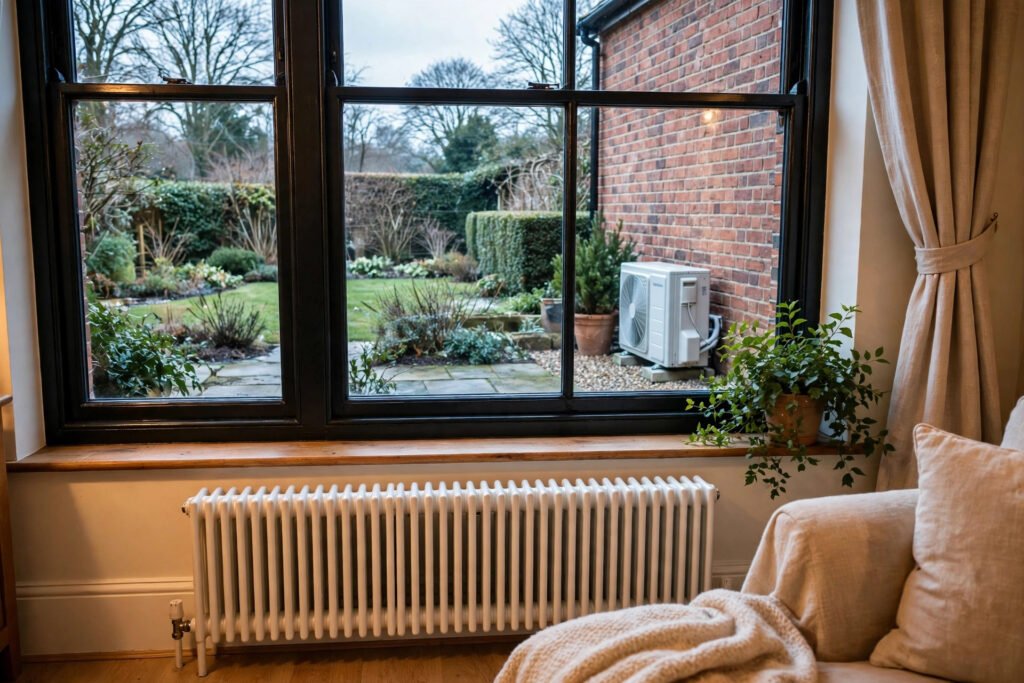
Heat pumps run at lower flow temperatures than boilers, so some radiators may need to be replaced with larger ones to warm rooms properly. A few radiator swaps add a modest amount; replacing most of the radiators in the house adds considerably more. Our guide to whether heat pumps work in old houses explains why this matters.
The hot water cylinder
If you currently have a combi boiler, you will probably need a new hot water cylinder and somewhere to put it, such as an airing cupboard. That adds cost and takes up space, and it surprises many people who have enjoyed a cylinder-free home.
Electrical and building work
Some homes need consumer unit upgrades or new electrical supplies for the heat pump. Ground works, scaffolding for awkward access, and making good afterwards can also add to the bill.
Air source versus ground source costs
This article focuses on air source heat pumps because they suit most UK homes and need no digging. Ground source heat pumps, which draw heat from loops or boreholes in the ground, cost substantially more to install because of the groundwork involved, even after the same £7,500 grant. They can be a good option for rural properties with plenty of land, but for most households the air source route is the realistic one.
Is it worth the money?
That depends on what you are replacing and how well the system is designed. Running costs are a separate question, and we work through the numbers honestly in our comparison of heat pump running costs versus a gas boiler. An annual service is recommended to keep everything running efficiently and protect warranties.
The sensible approach is to get at least two or three quotes from MCS certified installers, each based on a room-by-room heat loss calculation, and to compare what is included — not just the headline price. The cheapest quote is not good value if it leaves you with undersized radiators and a system that struggles all winter.
Frequently Asked Questions
How much does an air source heat pump cost after the grant?
Using the Energy Saving Trust’s typical installation cost of around £12,000, the £7,500 Boiler Upgrade Scheme grant leaves around £4,500 to pay. Your own balance could be lower for a small, simple installation or considerably higher for a large home needing new radiators, a cylinder and electrical work.
Can I get the grant if I am replacing a gas boiler?
Yes. GOV.UK lists gas among the fossil fuel heating systems the scheme is designed to replace, alongside oil, LPG and electric heating. You must own the property, use an MCS certified installer, and be replacing the fossil fuel system rather than adding a hybrid.
Why is the grant £9,000 in some adverts?
Until March 2027 there is an additional £1,500 available on top of the standard £7,500, but only if your property is heated by oil or LPG and has no mains gas connection. Homes on mains gas receive the standard £7,500.
Does the price include new radiators?
Not always. Some quotes include any radiator upgrades the installer thinks are needed; others price the heat pump and cylinder only. Ask each installer to list exactly which radiators, if any, are included, so you are comparing like with like.
How long does installation take?
A typical installation takes a few days, depending on how much radiator, pipework and electrical work is involved. Your installer should give you a clear schedule, including how long you will be without heating and hot water.
[…] Upgrade Scheme does not cover them — that scheme is for heating systems such as those in our heat pump cost guide. Some households on lower incomes may get solar funded as part of wider schemes, such as the Warm […]