
How Much Does Loft Insulation Cost — and How Much Does It Save?
On this page
If your home feels cold upstairs in winter no matter how long the heating runs, your loft is a likely culprit. Warm air rises, and without enough insulation above your ceilings, a large share of the heat you have paid for drifts straight out through the roof. The Energy Saving Trust estimates that an uninsulated home loses around 25% of its heat this way. The good news is that loft insulation is one of the simplest and cheapest energy upgrades available — and one of the few that can be tackled as a DIY job. This guide covers what it costs, what it could save, and how to tell whether your loft needs attention.
How much loft insulation do you need?
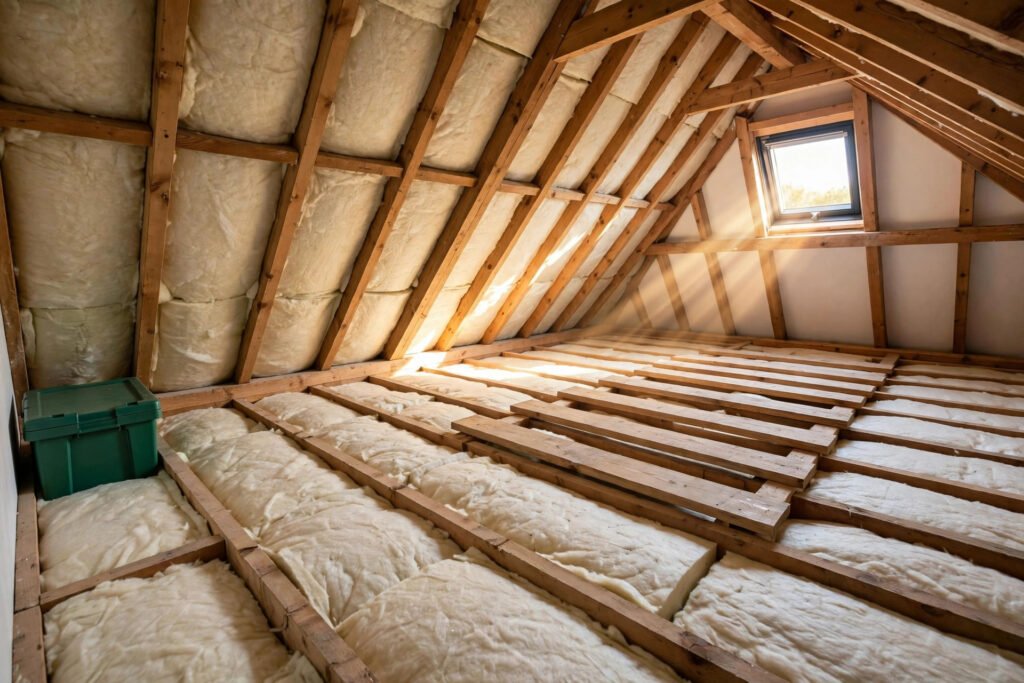
Current building regulations recommend a minimum depth of 270mm for mineral wool insulation, according to the Energy Saving Trust. Many older homes have far less: insulation standards were much thinner in the past, and material can also slump, get squashed by stored boxes, or be left patchy around pipes and the loft hatch.
Checking your current depth takes minutes. Take a tape measure into the loft and measure the insulation in a few places, including between the joists and across the top layer. If you find around 120mm or less, you are well short of the recommended depth and a top-up is worth considering. If you already have close to 270mm in good, dry condition, adding more will make very little difference — the biggest gains always come from lofts that start with little or nothing.
Depth matters more than exotic materials. Standard mineral wool or fibreglass rolls are inexpensive and effective, while natural fibres and foam boards cost more. Whatever you choose, the aim is an even, unbroken layer at the recommended depth for that material.
What does loft insulation cost?
The Energy Saving Trust puts the cost of installing 270mm of loft insulation in Great Britain at around £750 for a typical home, and around £600 if you are topping up from an existing 120mm layer. Because bigger roofs need more material and labour, costs vary by property type. Figures published by the HomeOwners Alliance, sourced from the Energy Saving Trust (July 2026), give a useful breakdown:
- Mid-terrace house: around £650
- Semi-detached house: around £750
- Detached house: around £1,100
- Detached bungalow: around £1,200
Bungalows often cost the most despite having fewer storeys, simply because the roof covers the whole footprint of the home. Doing the job yourself with rolls of insulation can reduce the cost considerably, but only attempt it if your loft is easy to access, free of damp, and not a flat roof or a lived-in room — those situations need a professional.
Extra work adds to the bill. If you store things in the loft, you will need raised boarding so the new insulation is not compressed, because squashed insulation does not work properly. Tanks and pipes in the loft may also need lagging once the loft becomes colder.
How much could it save?
Using the same Energy Saving Trust estimates (July 2026) for a gas-heated home moving from no insulation to the full 270mm, the estimated annual bill savings are:
- Mid-terrace house: around £140 a year
- Semi-detached house: around £190 a year
- Detached bungalow: around £350 a year
- Detached house: around £360 a year
These are estimates, not guarantees. Your actual saving depends on your home’s size, how you heat it, and future energy prices. Homes heated by electricity or oil typically spend more per unit of heat, so savings there can be higher.
Topping up tells a different story. If you already have 120mm and raise it to 270mm, the Energy Saving Trust estimates a saving of only around £17 a year in Great Britain. That is still worth doing if you are in the loft anyway, but do not expect a top-up to transform your bills — most of the benefit comes from the first layers.
On the HomeOwners Alliance figures, a paid-for installation typically pays for itself in around three to five years, depending on the property. After that, the savings continue: correctly installed loft insulation should last around 40 years, according to the Energy Saving Trust, so it can pay for itself many times over. It also makes a natural partner for cavity wall insulation, which tackles heat escaping through the walls.
Can you get help with the cost?
Some households can get insulation funded through government-backed schemes aimed at lower-income households and poorly rated homes. The Energy Saving Trust notes that the government’s Warm Homes Plan is set to invest close to £15 billion in improving the UK’s homes, including fully funded insulation support for people on low incomes and low or zero-interest loans for other homeowners. Eligibility rules change, so check the current position on GOV.UK or via the Energy Saving Trust before assuming you do or do not qualify.
If you rent, insulation is your landlord’s responsibility to arrange, although minimum energy efficiency standards apply to rented homes. It is still worth raising a thin loft with your landlord, because it affects your bills every day.
DIY or professional — and what can go wrong
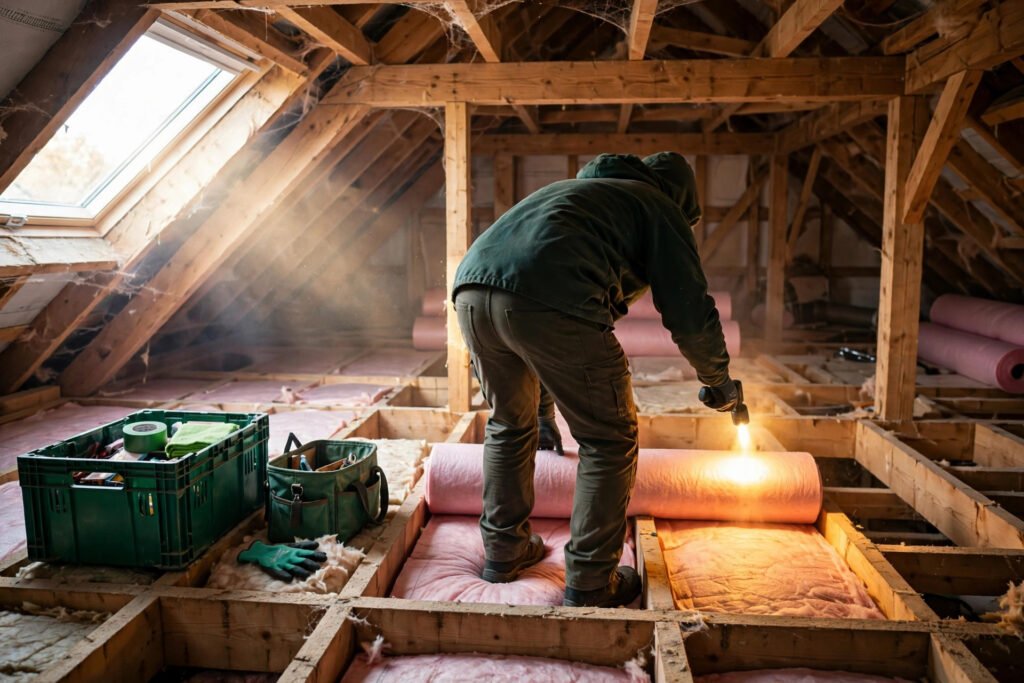
For a straightforward loft with regular joists, the standard approach is a first layer of roll insulation laid between the joists, then a second layer laid at right angles over the top to reach 270mm. Wear gloves, a mask and protective clothing, and work from boards rather than balancing on joists.
Three mistakes undo the benefit. First, blocking ventilation: a loft needs airflow to avoid condensation, so do not push insulation tight into the eaves. Second, ignoring damp — fix leaks and damp problems before insulating, because insulation can trap moisture. Third, leaving gaps around downlights, pipes and the hatch, which let warm air bypass the insulation entirely.
Choose a TrustMark-registered installer if you hire a professional, and get more than one quote. Insulation also helps prepare your home for low-carbon heating, as we explain in Do Heat Pumps Work in Old Houses? — and for more ways to trim your bills day to day, see our 20 ways to cut your energy bill this winter.
Frequently Asked Questions
Is 270mm of loft insulation really necessary?
It is the recommended minimum depth for mineral wool under current building regulations. Shallower layers still help, but 270mm is the point at which heat loss through the roof is reduced to a low level for a modest material cost.
How long does loft insulation last?
The Energy Saving Trust gives a lifespan of around 40 years if it is installed correctly and kept dry. Check it every few years for damp, damage or compression.
Will topping up from 120mm to 270mm save much?
Only a modest amount — the Energy Saving Trust estimates around £17 a year in Great Britain. It is worthwhile for comfort and if the work is cheap, but the dramatic savings come from insulating an uninsulated loft.
Can I board over new insulation for storage?
Yes, but use raised loft legs or a similar system so the insulation keeps its full depth. Laying boards directly on top compresses it and reduces how well it works.
Does loft insulation help in summer?
Yes. The same layer that keeps heat in during winter slows heat entering through a sun-warmed roof in summer, which can make top-floor bedrooms more comfortable.
[…] setbacks than a well-insulated one. Insulation itself slows the cooldown — see our guides to loft insulation and cavity wall insulation for the two biggest […]
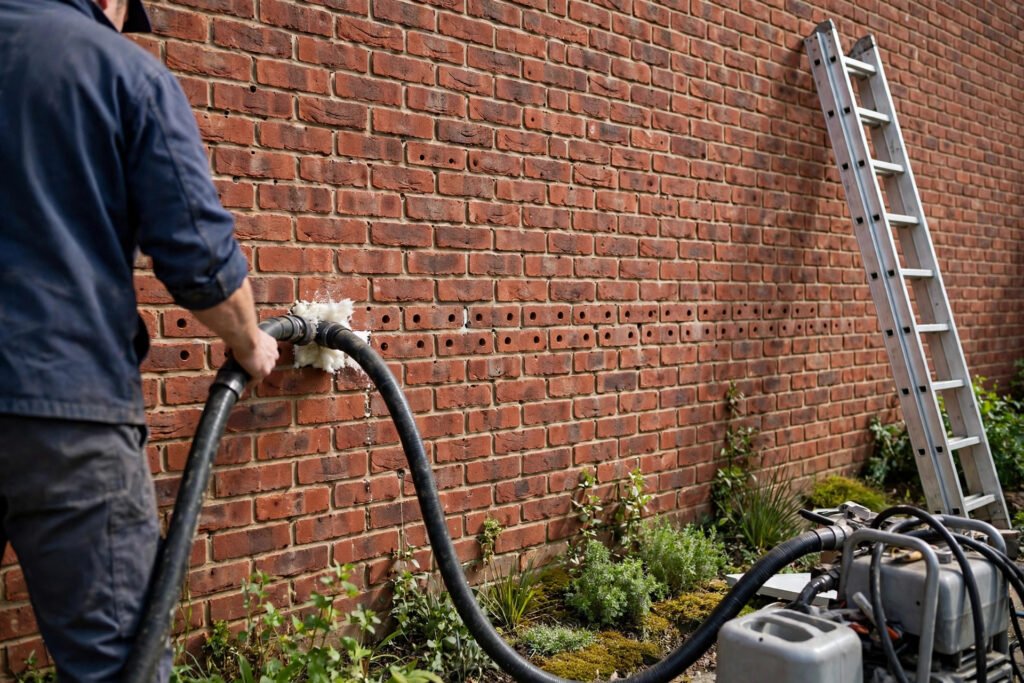
[…] loft insulation, this is not a DIY job. A registered installer drills small holes in the outer wall — around 22mm […]
[…] insulation is usually the best value measure in any home, old or new, and our guide to loft insulation costs and savings walks through the numbers. Draught-proofing doors, windows, floorboards and unused chimneys (with […]
[…] Ask too whether the money would do more elsewhere: for many homes, insulation such as in our loft insulation guide repays its cost far […]
[…] £20 a year, while fully insulating an uninsulated loft saves considerably more — our guide to loft insulation costs and savings breaks down […]