
Solar Battery Storage: Costs, and Whether You Actually Need One
On this page
A battery is the most common add-on offered with solar panels, and the one most likely to be oversold. Installers may present it as an obvious companion purchase, but the economics are very different from the panels themselves. A battery generates nothing — it only stores electricity for later — so whether it is worth buying depends on a narrow gap between two prices. This guide sets out what batteries cost, how that value works, and the situations where a battery genuinely makes sense.
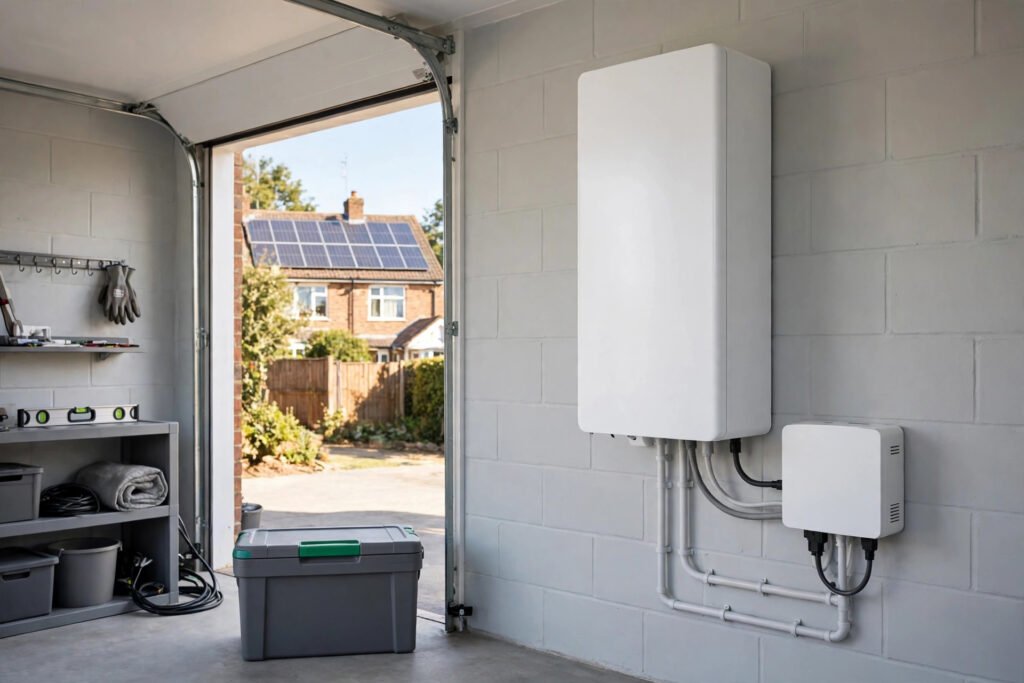
What a battery does
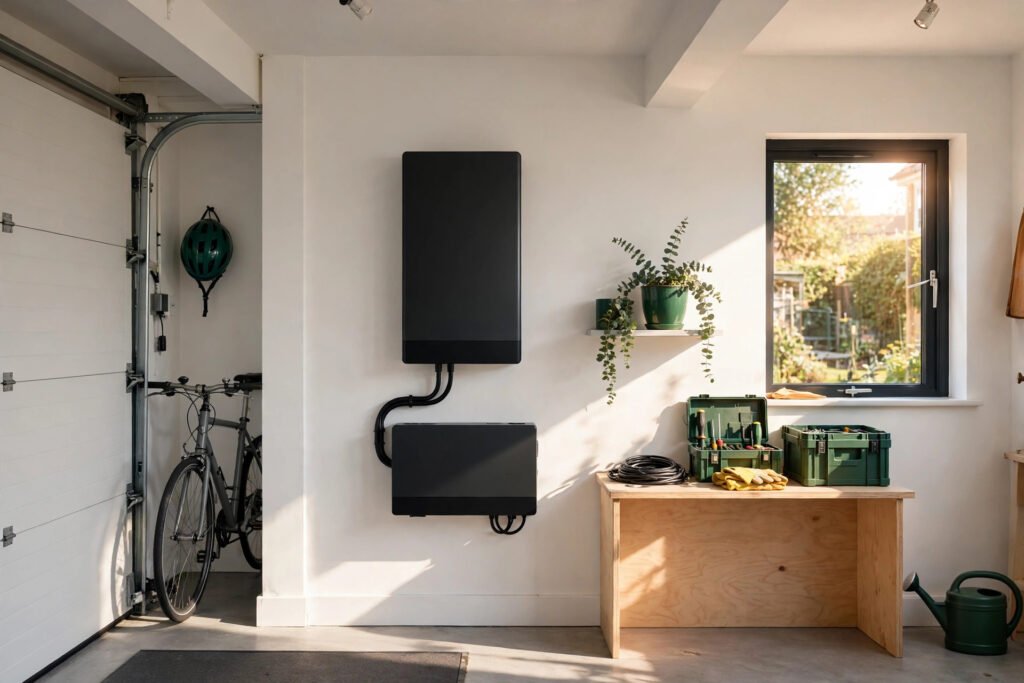
Without storage, solar electricity must be used at the moment it is generated or exported to the grid. A battery charges when your panels produce more than your home is using, then discharges in the evening and overnight. This raises your self-consumption — the share of your own generation you actually use — and cuts what you buy from the grid.
Batteries are sized by capacity in kilowatt hours (kWh): how much energy they can hold. The Energy Saving Trust notes that a typical home battery system might be around 10 kWh, although many households fit something smaller, and there is no exact formula — sizing depends on your generation and evening demand. A battery much larger than your typical daily surplus will sit partly empty and never earn its keep.
What batteries cost
The Energy Saving Trust puts the cost of a home battery system in a broad range of £1,500 to £10,000 depending on type and size, with a 5 kWh system at around £4,600. MoneySavingExpert uses the same £4,600 figure for 5 kWh in its worked examples, alongside illustrative installed prices of around £3,500 for 3 kWh and £5,500 for 7 kWh. As a rough guide:
| Capacity | Indicative installed cost |
|---|---|
| Around 3 kWh | Around £3,500 (illustrative) |
| Around 5 kWh | Around £4,600 (Energy Saving Trust) |
| Around 7 kWh | Around £5,500 (illustrative) |
| Around 10 kWh | Towards the upper part of the £1,500–£10,000 range |
Notice that cost per kWh falls as capacity rises, because the inverter, installation and electrical work are largely fixed. Fitting a battery with your panels is usually cheaper than retrofitting later, as the installer is already on site. Home battery installations are currently zero-rated for VAT — including standalone batteries added to an existing system, which have qualified since February 2024 — until 31 March 2027, after which a 5% rate is due.
Batteries do not last as long as panels. Expect a lifespan of around 10–12 years, according to the Energy Saving Trust, compared with 25 years or more for the panels themselves. Ask every installer for the warranty length and the guaranteed capacity the battery will still hold at the end of it.
The maths: a battery only earns the gap
Here is the key point that sales material often glosses over. Every unit a battery stores for you is a unit you would otherwise have exported. So the battery does not earn the full import price — it earns the difference between the import price you avoid and the export payment you give up.
Using current figures: the Ofgem price cap for October to December 2026 puts electricity at 26.32p per kWh, and a typical export rate is around 12p per kWh. The gap is therefore about 14.3p per kWh stored and later used.
Suppose a 5 kWh battery stores around 4 kWh of usable surplus on a good day and cycles that way on roughly 300 days a year — allowing for poor winter generation, when there may be little surplus to store. That is about 1,200 kWh a year, worth roughly £172 at the 14.3p gap. Against a cost of £4,600, the simple payback is over 25 years — far beyond the battery’s 10–12 year lifespan. Even on a poor export tariff of around 5p, where the gap widens to about 21p, the same battery earns roughly £255 a year and still takes around 18 years to pay back on solar storage alone.
This is why the Energy Saving Trust cautions that battery savings will not always be enough on their own to justify the cost. If you have not already read it, our explainer on whether solar panels are worth it shows the same gap logic applied to the panels themselves.
When a battery does make sense
The picture changes in a few specific situations:
- Time-of-use tariffs. If you can charge overnight at a cheap off-peak rate and discharge at peak prices, the battery earns that much larger gap every day of the year, not just on sunny days. This “arbitrage” is where batteries perform best financially — but check the tariff’s terms and how long the cheap window lasts.
- You are out all day and use power in the evening. Low daytime self-consumption means lots of surplus to store, so the battery cycles fully instead of sitting idle.
- You have an electric vehicle or a heat pump. Higher overall electricity use gives stored energy somewhere valuable to go. Our guide to heat pump running costs covers the heating side of that picture.
- You value backup power or independence. Some systems can keep essential circuits running in a power cut (check — many standard systems cannot). That is a legitimate reason to buy, as long as you know you are paying for peace of mind rather than savings.
When it probably does not
Skip the battery, for now, if you are at home most of the day and already use most of your generation directly; if your export tariff is generous, which shrinks the gap; or if your roof generates little surplus. You can always add a battery later — there is no need to decide on day one, and prices have been falling. Ask too whether the money would do more elsewhere: for many homes, insulation such as in our loft insulation guide repays its cost far faster.
Conclusion
Budget around £4,600 for a 5 kWh battery, expect it to last 10–12 years, and do the gap calculation with your own import and export rates before you buy. On solar storage alone, most households will not recover the cost within the battery’s life. On the right time-of-use tariff, or with high evening demand, the sums can work — but get the battery quoted separately from the panels so you can judge it on its own merits, and always compare the total against the panel-only benchmarks in how much solar panels cost.
Frequently Asked Questions
How long does a home battery last?
Typically around 10–12 years, according to the Energy Saving Trust, though this varies with the battery type and how heavily it is cycled. Check the warranty and the guaranteed remaining capacity at the end of the warranty period before buying.
Can I add a battery to existing solar panels?
Yes. Batteries can be retrofitted to an existing system, and since February 2024 standalone battery installations in homes qualify for the 0% VAT rate, which runs until 31 March 2027. Retrofitting usually costs more than fitting one alongside new panels, because of the extra visit and electrical work.
What size battery do I need?
There is no exact formula. As a starting point, match the battery to your typical evening and overnight use and the surplus your panels actually generate — a battery that rarely fills is wasted money. Your installer should base the recommendation on your usage data, not just your roof size.
Will a battery power my home in a power cut?
Only some systems can. Many standard grid-connected batteries shut down during a power cut for safety reasons unless they are fitted with backup functionality, which may cost extra. If backup matters to you, ask specifically and get it confirmed in writing.
Is a battery worth it without solar panels?
Usually not on cost alone, unless you are on a time-of-use tariff with a wide gap between off-peak and peak prices, so you can charge cheaply overnight and discharge at expensive times. Even then, run the numbers on your actual tariff before committing.
[…] total — storage typically adds several thousand pounds. We cover that separately in our guide to solar battery storage costs, including when it does and does not make financial […]
[…] and export rate, and it often lengthens it. We work through the numbers in detail in our guide to solar battery storage costs. If cost is your priority, also compare the system price itself against the benchmarks in how much […]