
What Uses the Most Electricity in Your Home?
On this page
Some appliances sip electricity. Others gulp it. Knowing which is which matters, because the cheapest energy saving is simply using the thirsty appliances a little less — while there is no point at all worrying about a phone charger. The Centre for Sustainable Energy (CSE) puts it well: as a rule, appliances that produce heat or have moving parts use far more electricity than those that produce light or sound. This guide ranks the main culprits, shows what they cost to run at today’s prices, and explains the one exception that catches everyone out.
How running costs are worked out
Every appliance has a power rating in watts (W) or kilowatts (kW), where 1,000W equals 1kW. Multiply the kilowatts by the hours used and you get kilowatt hours (kWh) — the “units” on your bill. Multiply that by your unit rate and you have the cost.
The figures below use the Ofgem price cap rate for 1 October to 31 December 2026: an average of 26.32p per kWh for electricity paid by Direct Debit. Your own tariff may differ slightly by region and payment method, but the ranking of appliances will be the same. The wattages are the average ratings published by the Centre for Sustainable Energy.
The appliances that use the most electricity
| Appliance | Typical wattage | Cost per hour | Cost per 10 minutes |
|---|---|---|---|
| Electric shower | 9,000W | £2.37 | 39p |
| Immersion heater | 3,000W | 79p | — |
| Kettle | 3,000W | 79p | 13p |
| Tumble dryer | 2,500W | 66p | 11p |
| Electric heater | 2,500W | 66p | 11p |
| Electric oven | 2,100W | 55p | — |
| Washing machine | 2,100W | 55p | — |
| Hairdryer | 2,000W | 53p | 9p |
| Microwave | 1,000W | 26p | 4p |
| Vacuum cleaner | 900W | 24p | 4p |
| Fridge-freezer | 300W | 8p | — |
| LCD TV | 120W | 3p | 1p |
| Laptop | 50W | 1p | — |
| Broadband router | 10W | Under 1p | — |
Costs calculated from CSE average wattages at 26.32p per kWh, rounded to the nearest penny. Ovens, washing machines, fridges and freezers switch their heating elements or motors on and off during use, so their real cost over a full cycle or day is lower than the hourly figure suggests — the wattage is the maximum draw, not a constant one.
Anything that heats is expensive
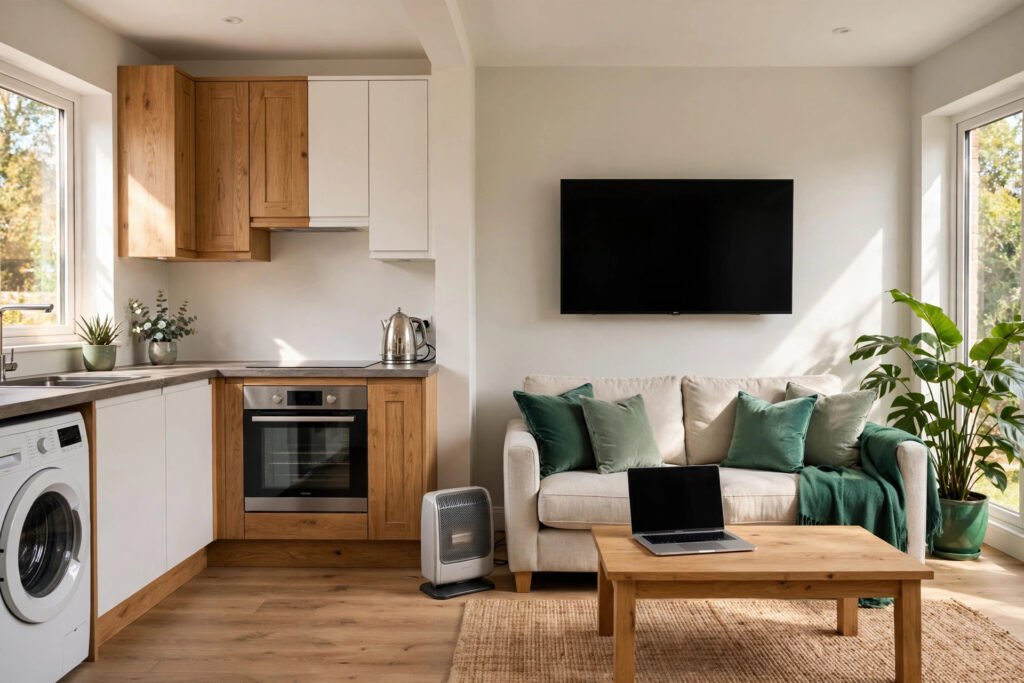
The pattern in the table is unmistakable: heat is what costs money. An electric shower is by far the hungriest common appliance at 9,000W — a 10-minute shower uses 1.5kWh and costs around 39p in electricity alone. Immersion heaters and kettles follow at 3,000W. Portable electric heaters deserve special attention in winter: at around 66p an hour, running one for four hours a day adds roughly £2.64 a day, which quickly outstrips the cost of heating the same room with gas central heating. If you rely on electric heating, our guide to what temperature your home should be will help you keep it under control.
Laundry: the quiet budget drain
Tumble dryers (2,500W) and washing machines (2,100W maximum draw) sit near the top of the table, and unlike a kettle they run for an hour or more at a time. The Energy Saving Trust estimates that avoiding the tumble dryer by line-drying or using racks could save around £50 a year in Great Britain, and that washing at 30°C and doing one fewer wash a week could save around £26 a year. A washing machine’s real cost per load is lower than the hourly figure implies, because it only draws full power while heating water — which is exactly why cooler washes cost less.
The always-on exception
A fridge-freezer draws little power at any moment, but it runs 24 hours a day, every day, so its annual consumption still adds up. The CSE cautions against simply multiplying its hourly cost by 24, because the compressor cycles on and off — the true daily cost is much lower. When you replace a fridge or freezer, the energy label’s annual kWh figure is the honest guide: multiply it by your unit rate to get the yearly running cost, and expect older, larger or American-style models to sit at the expensive end. Broadband routers are the opposite worry: at around 10W they cost under a penny an hour, so switching yours off nightly saves very little and may disrupt updates or connected devices.
Standby: small watts, real money
Individually, standby power looks trivial. Collectively it is not: the Energy Saving Trust estimates that switching appliances off standby properly could save around £45 a year in Great Britain. Televisions, consoles, set-top boxes and chargers left plugged in across the whole house are the usual offenders. A smart meter in-home display makes this visible — switch things off at the wall and watch the background load fall.
How to cut the cost without going without
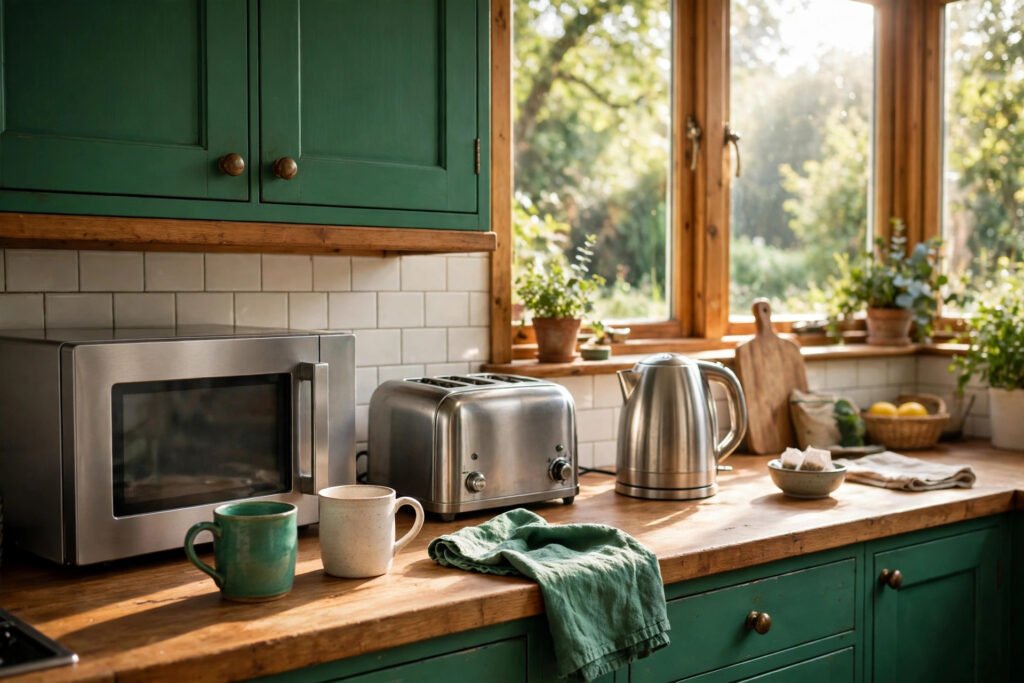
Start with the top of the table. Keep showers shorter, only boil the water you need — the Energy Saving Trust estimates that simply not overfilling the kettle could save around £10 a year — and think twice before plugging in a fan heater. Use the microwave (26p an hour) rather than the oven (55p an hour) for small meals and reheating. Run washing machines and dishwashers full, on eco settings, and check the energy label’s kWh figure when you replace an appliance: Citizens Advice explains that labels show consumption per 100 cycles for laundry appliances, which makes real running costs easy to compare and multiply by your unit rate.
Finally, remember that electricity is only part of the picture. For most homes with gas heating, gas is the bigger bill — which is why insulating your loft and using heating controls well usually save more than any single appliance change, and why our 20 ways to cut your energy bill this winter starts with heating rather than gadgets.
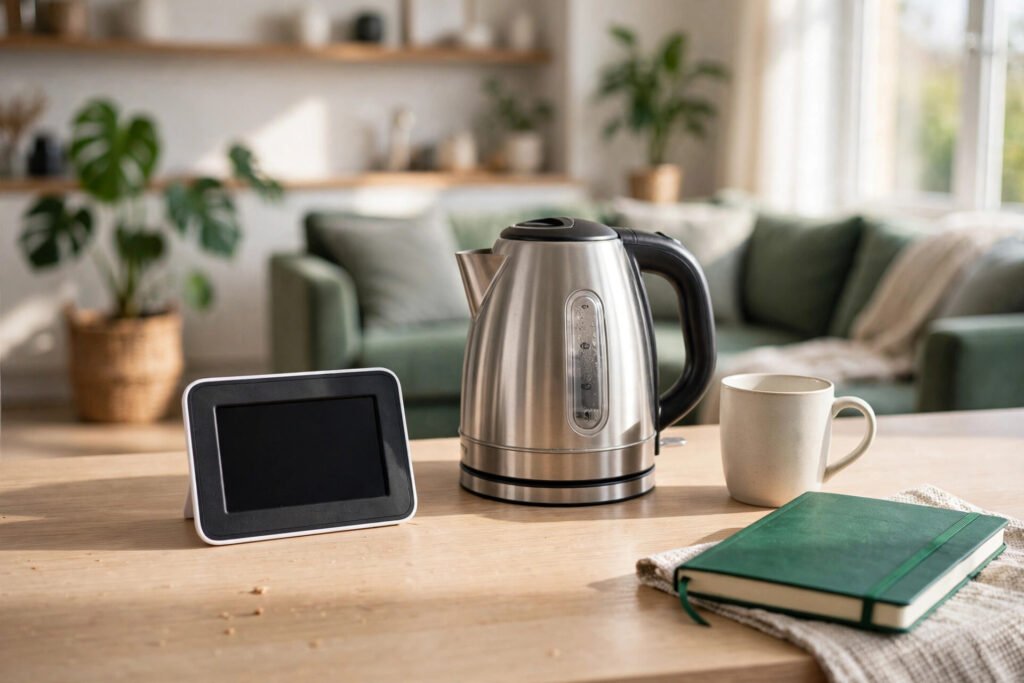
[…] the display spike; turn things off at night and see your background load. Combined with knowing what uses the most electricity at home, it turns vague intentions into specific […]
[…] machine and dishwasher to run on timers at midday raises self-consumption for free. Our round-up of what uses the most electricity at home helps you find the loads worth […]