
Cavity Wall Insulation: Cost, Savings and Common Problems
On this page
Walls are the largest surface of most homes, so it is no surprise they are a major escape route for heat. The Energy Saving Trust estimates that about 33% of all the heat lost in an uninsulated home escapes through the walls. If your home was built with cavity walls and that gap is still empty, filling it can make rooms warmer, reduce draughts and cut your heating bill. But cavity wall insulation also has a reputation for problems — usually when it is fitted in homes that were never suitable. This guide explains the costs, the estimated savings, and how to avoid the pitfalls.
Does your home have cavity walls?
Most houses built from the 1920s onwards have cavity walls: two layers of masonry with a gap between them. The outer layer is usually brick, and the inner layer brick or concrete block. Homes built from the 1990s onwards normally had insulation built in or added during construction, so the main candidates for retrofit insulation are homes built between the 1920s and the 1990s.
You can often tell from the brickwork. On a cavity wall, the bricks are usually laid lengthways in an even pattern, so they all look the same size from outside. On a solid wall, some bricks are laid across the wall, so you see their smaller ends in an alternating pattern. Wall thickness is another clue: measured at a door or window reveal, a brick wall between 260mm and 350mm thick is likely to be a cavity wall, while a thinner one is probably solid. Pre-1920 homes usually have solid walls, and some early cavities are narrower than 50mm — too narrow to insulate, in which case the wall should be treated as solid. If your walls are rendered or clad, ask a professional rather than guessing.
If you are unsure whether your cavities are already filled, a registered installer can carry out a borescope inspection by drilling a small test hole, or you can check your home’s Energy Performance Certificate (EPC).
How much does cavity wall insulation cost?
Installing cavity wall insulation for a typical home in Great Britain costs around £2,200, according to the Energy Saving Trust. In Northern Ireland the typical cost is lower, at around £1,000. Your quote will depend mainly on how much external wall your home has: a detached house with four exposed walls costs more to insulate than a mid-terrace with two, and access difficulties or scaffolding can add to the price.
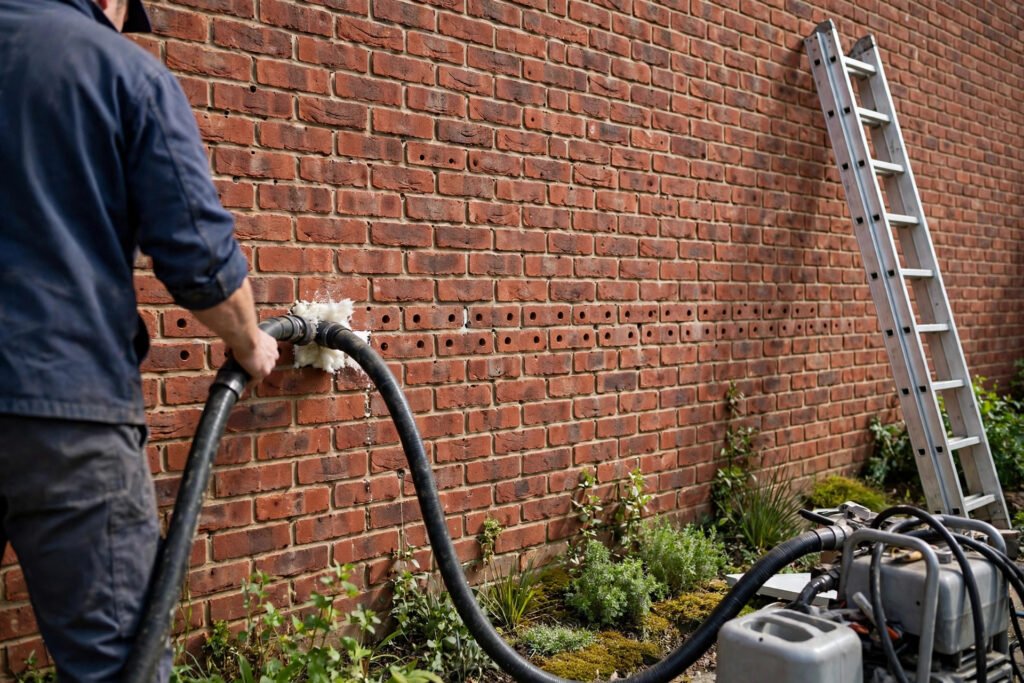
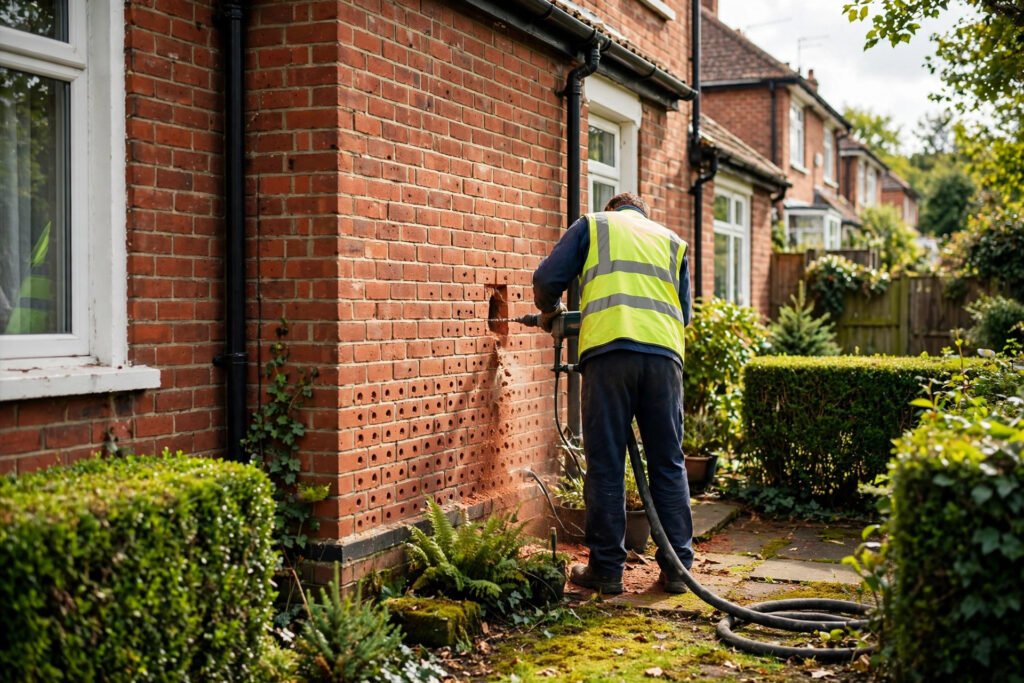
Unlike loft insulation, this is not a DIY job. A registered installer drills small holes in the outer wall — around 22mm wide, at intervals of roughly 1 metre — blows insulation material, usually polystyrene beads, into the cavity, and then fills the holes with cement. For an average home with easy access, the Energy Saving Trust says the work usually takes about two hours and should not make a mess indoors.
Some households may qualify for grant funding towards insulation through government-backed schemes, including the support being introduced under the Warm Homes Plan, so it is worth checking your eligibility before paying the full cost yourself.
How much could it save?
Estimated savings depend on how much wall area your home has exposed. Figures from Which?, calculated by the Energy Saving Trust using energy prices from July 2026 for a gas-heated home, suggest annual bill savings of around:
- Detached house: £380 a year
- Semi-detached house: £200 a year
- Detached bungalow: £160 a year
- Mid-terrace house: £110 a year
- Mid-floor flat: £110 a year
Treat these as estimates rather than promises: they assume typical use of a gas-heated home, and your result will vary with your heating system, how warm you keep your home, and future prices. Homes heated with electricity tend to see larger cash savings because electricity costs more per unit than gas.
A simple way to judge value is to divide the installed cost by the estimated annual saving. For a typical home costing around £2,200 and saving around £200 a year, that suggests a payback of roughly a decade on bill savings alone — longer than loft insulation, but the work should be guaranteed for 25 years (see below), and the comfort improvement is immediate. Insulation also supports an EPC upgrade, which matters if you plan to sell or let the property.
Common problems — and how to avoid them
Properly installed in a suitable home, cavity wall insulation should not cause problems, and the Energy Saving Trust stresses that many people have no issues at all. The problems that do occur are usually traced back to suitability or installation quality.
Damp and water penetration
The cavity in a wall originally helped stop rain reaching the inner leaf. If a home is exposed to severe driving rain, in poor repair, or at risk of flooding, insulation can in some cases help moisture cross the cavity or trap damp that is already there. This is why the Energy Saving Trust says insulation may not be suitable for homes exposed to extreme weather or flooding, in poor condition, or with cavities narrower than 50mm.
Before any work, repairs must come first: damaged brickwork and pointing, leaking roofs, and faulty gutters and downpipes should all be fixed, otherwise you risk trapping damp or the insulation failing. A good installer will check for rubble or debris in the cavity too.
Blocked ventilation
Homes need controlled airflow to stay dry and healthy. Installers must not block air bricks, underfloor grilles or wall and trickle vents, and may need to add ventilation. Sealed-up vents are a warning sign of a careless job.
Cold spots and patchy filling
If the cavity is not filled evenly, some areas of wall stay cold, which can attract condensation. A thorough survey and a registered installer reduce this risk considerably.
If problems appear afterwards
Contact the installing company first and ask them to inspect; they should fix installation faults or remove the insulation if required. If the firm will not help or no longer exists, check for a guarantee certificate from the Cavity Insulation Guarantee Agency (CIGA). Installation work should be guaranteed for 25 years by CIGA or an independent insurance-backed guarantee, and the guarantor can step in under the terms of that guarantee. An independent surveyor from the Royal Institution of Chartered Surveyors (RICS) can assess whether insulation is really the cause, since damp often comes from maintenance issues instead.
Is it worth it for your home?
Cavity wall insulation is most worthwhile for an uninsulated cavity-walled home in good repair, in a location not battered by driving rain, where you plan to stay long enough to enjoy both the savings and the warmer rooms. Pair it with good loft insulation and sensible heating habits — our guide to what temperature your home should be explains how thermostat settings affect the same bills — and you have the fabric basics covered before considering bigger upgrades.
Always use a TrustMark-registered installer, insist on a pre-installation survey, and keep the guarantee paperwork with your property documents.
Frequently Asked Questions
How do I know if my cavity walls are already insulated?
Homes built in the last 20 years or so usually are. For older homes, check your EPC, ask building control, or arrange a borescope inspection through a registered installer.
Can cavity wall insulation cause damp?
It should not if the home is suitable and the work is done correctly. Problems usually follow installation in exposed, flood-prone or poorly maintained properties, or where ventilation was blocked.
How long does installation take?
For an average home with easy-to-access walls, around two hours, according to the Energy Saving Trust. Larger or awkward properties take longer.
What guarantee should I get?
Installation work should be guaranteed for 25 years by the Cavity Insulation Guarantee Agency (CIGA) or an independent insurance-backed guarantee. Keep the certificate safe.
My home has solid walls. Can I still insulate them?
Yes, but with solid wall insulation — internal or external systems — rather than cavity filling. It costs more and is a bigger job, so get specialist quotes.
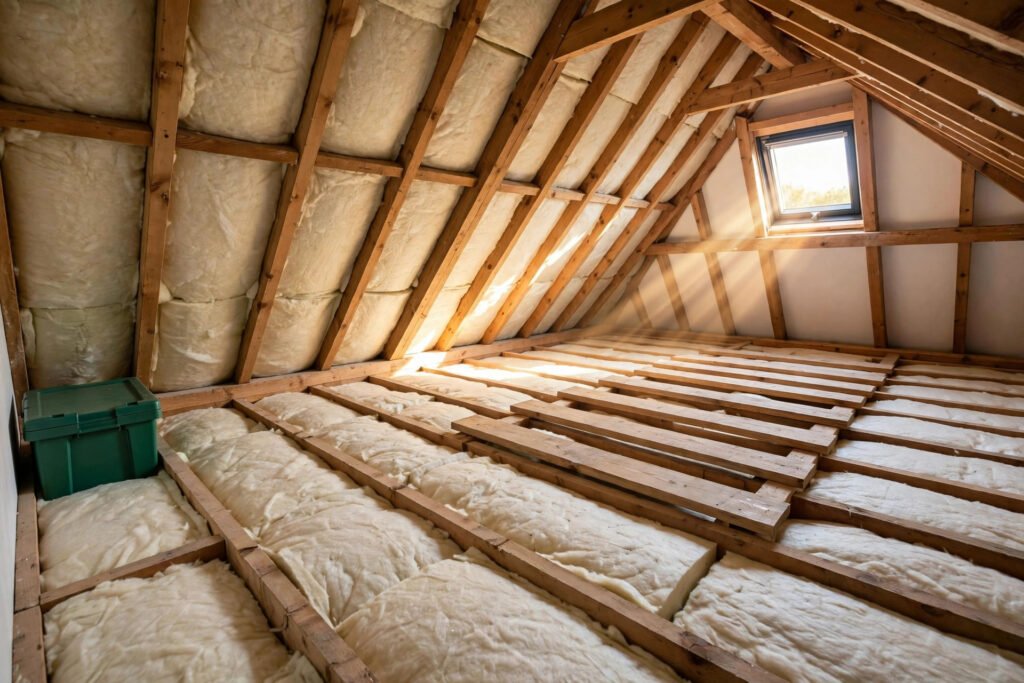
[…] Energy Saving Trust, so it can pay for itself many times over. It also makes a natural partner for cavity wall insulation, which tackles heat escaping through the […]
[…] your home has cavity walls, filling them is a well-established measure — see our guide to cavity wall insulation costs, savings and problems. Solid walls are harder: insulation means external cladding or internal lining, both of which are […]
[…] well-insulated one. Insulation itself slows the cooldown — see our guides to loft insulation and cavity wall insulation for the two biggest […]