
Combi vs System vs Regular Boiler: Which Is Right for Your Home?
On this page
“Do you want a combi, a system or a regular boiler?” It is one of the first questions an installer will ask — and one of the hardest to answer if nobody has explained what the three types actually do differently. All three burn the same fuel and can be highly efficient. The real differences are how they deliver hot water, how much space they take up, and how well they cope when several people want hot water at the same time. This guide compares them side by side so you can have that conversation with confidence.
The three types at a glance
- Combi (combination) boiler: one unit provides both central heating and hot water, heating water instantly from the mains as you need it. No cylinder, no loft tank.
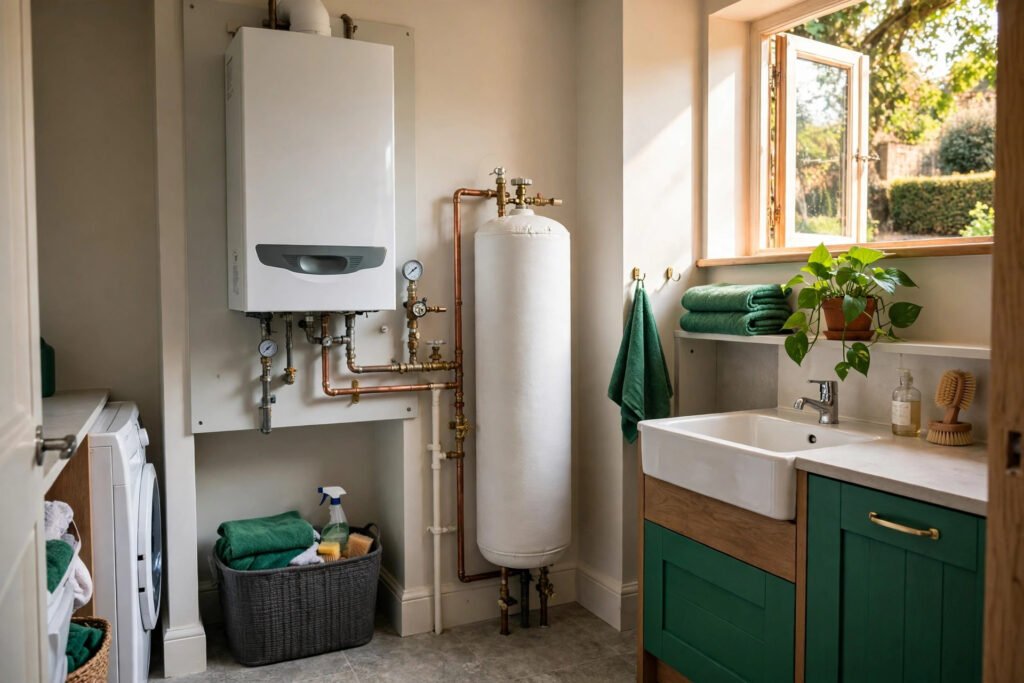
- System boiler: provides central heating and heats water stored in a separate hot water cylinder. Most components, such as the pump and expansion vessel, are built into the boiler. No loft tank needed.
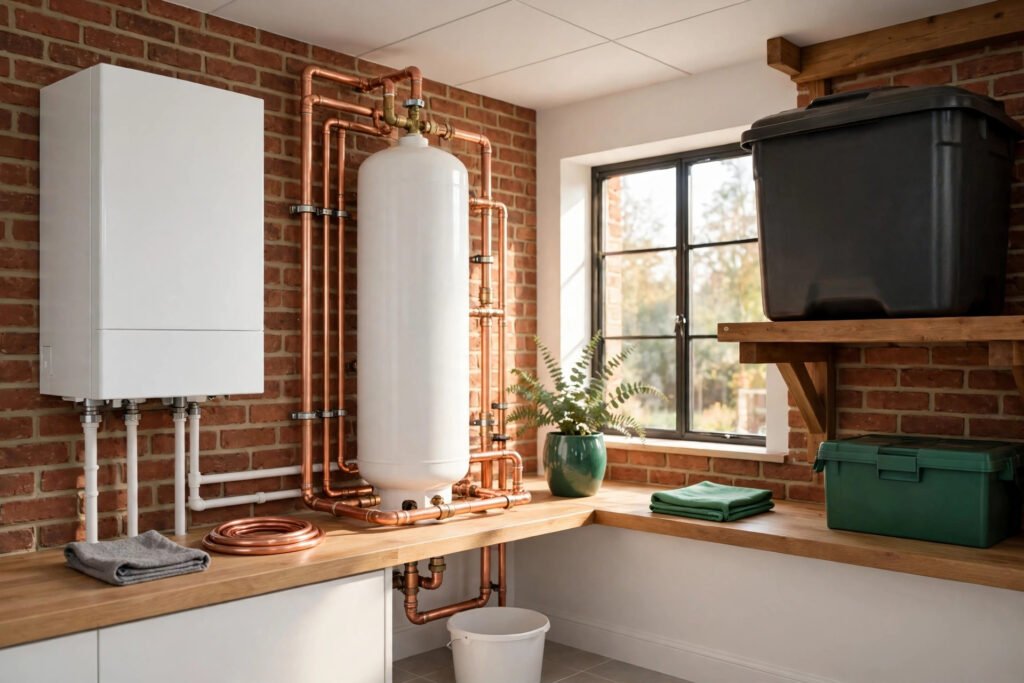
- Regular boiler: also called conventional or heat-only. It works with a hot water cylinder and a cold water storage tank, usually in the loft, which feeds the system by gravity.
All modern boilers sold in the UK must be A-rated under the ErP efficiency scale, which runs from A (most efficient) to G (least), and new condensing models typically achieve ErP ratings of around 92–94%. In other words, efficiency alone rarely decides this choice — your home and your household’s hot water habits do.
Combi boilers: best for smaller homes and simpler installs
A combi is the most popular choice in the UK, and it is easy to see why. Because it heats water on demand, there is no cylinder to find cupboard space for and no tank in the loft, which frees up storage and suits flats and smaller houses well. There is no stored water to run out of, and no waiting for a cylinder to reheat. Checkatrade also notes combis are compact and relatively easy to install, which helps keep fitting costs down: a like-for-like combi replacement typically costs £2,500–£4,000 supplied and installed.
The trade-off is simultaneous demand. A combi can only heat so much water at once, so running a shower while someone fills a bath or turns on the kitchen tap can reduce flow and temperature. Combis also depend on good mains water pressure — in a home with weak mains pressure, the hot water performance will reflect that. For a one-bathroom home with one or two occupants, neither issue usually matters. For a busy family home, they might. Our breakdown of how much a new boiler costs explains the price differences in more detail.
System boilers: the family-household option
A system boiler stores hot water in a cylinder, which changes the maths completely. Because the water is already hot and stored, the system can supply several outlets at the same time — two showers running together is a realistic expectation rather than a gamble. That makes a system boiler the natural choice for larger homes with two or more bathrooms and higher occupancy.
You do need somewhere to put the cylinder, usually an airing cupboard, and the stored water is finite: a long succession of baths can empty it, and you then wait while it reheats. System boilers are also more compact than a regular set-up because there is no cold water tank in the loft. In terms of cost, Checkatrade puts an average system boiler supply price at around £1,500 and a replacement at around £3,000 supplied and installed — but if the cylinder also needs replacing, expect that to be quoted as an extra.
Regular boilers: traditional, and still right for some homes
A regular boiler is the oldest arrangement of the three. The cold water tank in the loft feeds the cylinder and the heating system by gravity, and the boiler heats water that is stored for later use. It can supply hot water to multiple outlets, and because the system is not wholly dependent on mains pressure, regular boilers remain a sensible fit for older properties with low mains pressure or older pipework and radiators that might not suit a sealed, high-pressure system. An immersion heater in the cylinder can also provide backup hot water if the boiler itself breaks down.
The downsides are space and heat loss: you need room for both a cylinder and loft tanks, and stored hot water gradually loses heat if it sits unused. Like a system boiler, the stored supply can run out during heavy use. Costs are similar to a system boiler — around £1,500 on average for the unit and around £3,000 supplied and installed for a like-for-like replacement.
Which one is right for your home?
Work through these questions:
- How many bathrooms do you have? One bathroom points to a combi; two or more bathrooms in regular simultaneous use points to a system or regular boiler.
- How much space can you spare? No room for a cylinder rules out system and regular. No loft, or a converted loft, rules out a regular boiler’s tanks.
- What is your mains pressure like? Weak mains pressure undermines a combi and can favour a regular system. Your installer can test this.
- What do you already have? Swapping like-for-like is the cheapest route. Converting from one type to another — for example, system to combi — averages around £4,000 supplied and installed, because tanks, cylinders and pipework have to be removed or altered.
- Is anyone at home all day? Stored-water systems suit predictable routines; a combi’s on-demand approach suits irregular use, since no energy goes into keeping a cylinder hot.
Whatever you choose, the boiler must be correctly sized for your home’s heat loss and radiator count. That calculation is part of the installer’s job — be wary of anyone who quotes without assessing the property. Before any of this, if your current boiler has simply stopped, the checks in boiler not working? 7 checks before you call an engineer may save you an unnecessary decision altogether. And if you are weighing a boiler against newer technology, our comparison of heat pump running costs vs a gas boiler is worth reading first.
Conclusion
There is no universally “best” boiler — there is only the best fit. Choose a combi for a smaller home with one bathroom and limited space, a system boiler for a larger household that needs hot water in several places at once, and a regular boiler where an older property, low mains pressure or existing tanks and pipework make the traditional set-up the pragmatic option. Get the choice right and the boiler itself — whichever type — should serve you for the next 10 to 15 years.
Frequently Asked Questions
Which boiler type is the most efficient?
All three types are available as A-rated condensing models with ErP ratings of around 92–94%, so there is little between them on paper. In practice, a combi avoids the heat losses of stored water, while system and regular boilers avoid straining to meet peak demand. Controls and correct sizing matter more than the type alone.
Can I swap my regular boiler for a combi?
Yes, and many households do, to free up the airing cupboard and loft space. Expect to pay more than a like-for-like swap — conversions average around £4,000 supplied and installed — because the cylinder and tanks must be removed and pipework altered. Your installer should also check your mains pressure is good enough for a combi.
Which boiler is best for a large family?
Usually a system boiler. Stored hot water means several taps and showers can run at once without the flow dropping, which is exactly where a combi struggles. A regular boiler can do the same job in an older property already fitted with tanks.
Do I need planning permission to change boiler type?
Changing boiler type inside your home does not normally require planning permission, but the installation must comply with Building Regulations and gas work must be done by a Gas Safe registered engineer, who will usually handle the notification for you.
[…] average to budget for. If you are still deciding whether a combi suits your home, our guide to combi vs system vs regular boilers walks through the […]